Seguridad en Punta Cana: A Security Plan for the Owner Who Is Not There
Most pages about safety in Punta Cana answer a visitor's question: is it all right to come for a week? An owner at Andara has a harder one, because for long stretches of the year the home will be occupied by guests, by staff, or by nobody at all. Security for an absent owner is less about the neighbourhood than about lists: who is allowed through the gate, who holds a key, what the building's rules say, and what a guest has been told before landing. This guide works through those layers in the order an owner can actually control them.
Why you will not find a crime figure on this page
Search for safety in Punta Cana and you will soon meet a number presented as the local level of crime. No official Dominican source publishes crime statistics below the level of the province, and no government advisory states a figure for Punta Cana or Bávaro, so any such number comes from a blog rather than a government. We would rather tell you that than print a figure nobody can check.
What the official record does contain is guidance. Global Affairs Canada's page for the country, modified on 24 September 2026, keeps a single country-wide instruction to exercise a high degree of caution and names crime as the reason. It does not rate Punta Cana separately, and none of the governments we have checked gives this area a risk level of its own, higher or lower. That is why the rest of this page is about controls rather than reassurance: the things an owner arranges once, on an ordinary day, so that the months away run without them.
Layer one: the Cap Cana gate only knows who you tell it about
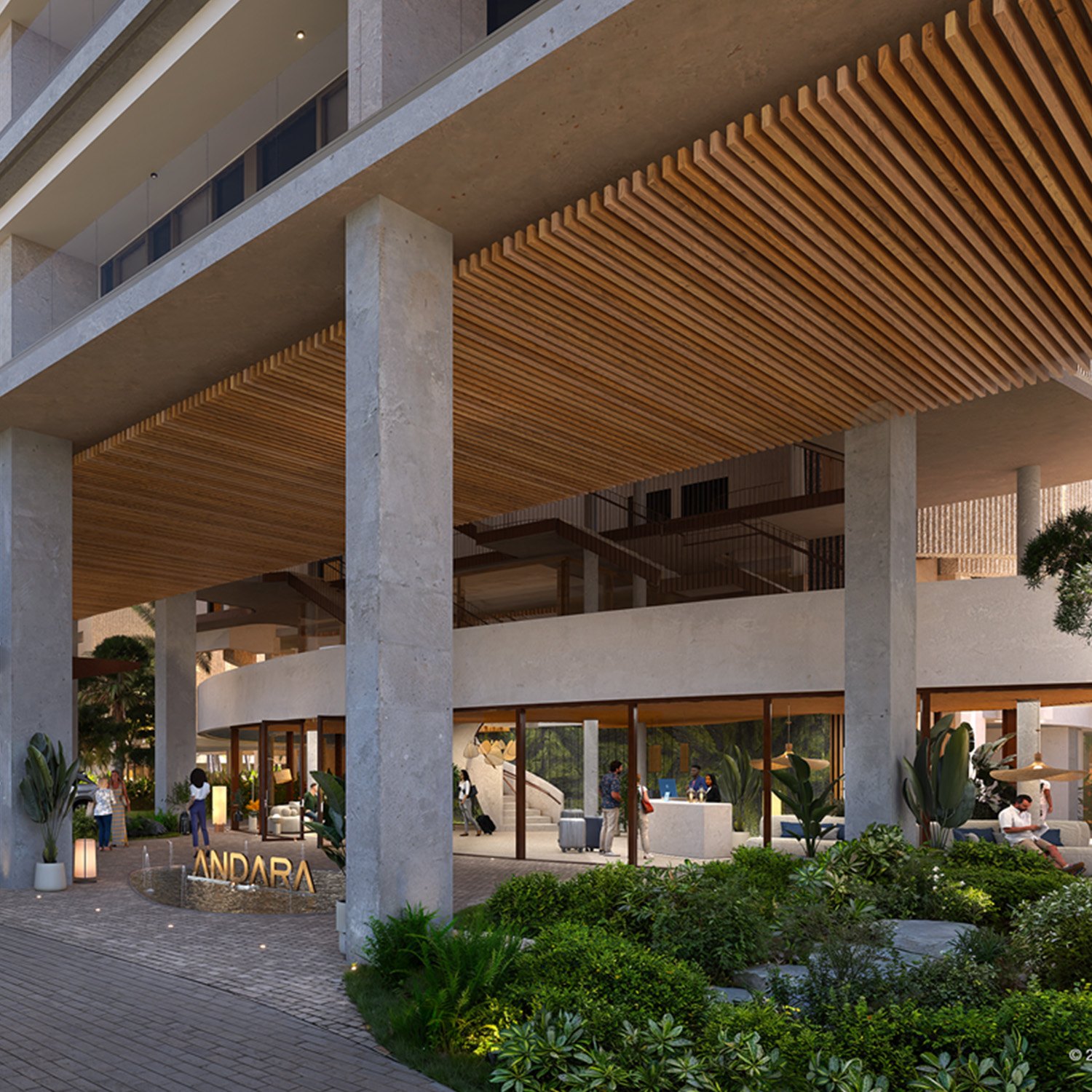
Andara sits inside Cap Cana, and the development's own sales page describes arriving through the community's gated main entrance. Cap Cana publishes its access rules for owners, and they are more practical than any brochure line. An owner carries an owner's identification that admits them through a preferential lane. A guest is registered in advance, in writing, with a full name, a copy of an identity document, the destination and the length of the pass, and receives a digital access ticket. Contractors and employees who come to the unit are registered the same way.
Letting a residence to a tenant goes further: before a lease is signed, the owner sends a copy of the identity document of the prospective tenant and of everyone else who will live there, customer service screens them, and only then is a resident identification request completed and returned with the lease.
The consequence for someone who lives abroad is simple and easy to neglect. The gate works from a list, and the list is yours to keep. Register the cleaner, the air-conditioning technician and the friend borrowing the unit before they arrive, with an end date, and let those passes lapse. The published rules do not say whether a guest booked through a short-stay platform is processed as a visitor or as a tenant, so confirm that with Cap Cana's customer service and with the building's management before your first booking rather than at the barrier.
| Who is coming | What Cap Cana's published rules ask the owner to send | When |
|---|---|---|
| The owner | Nothing extra: the owner's identification admits them through the preferential lane | Once issued |
| A guest | Full name, a copy of an identity document, the destination and the length of the pass | In advance, in writing |
| A contractor or employee | The same details as for a guest | Before the visit |
| A tenant on a lease | Identity documents for everyone who will live in the unit, then a resident identification request returned with the lease | Before the lease is signed |
Layer two: what the condominium decides for all 175 residences
Once Andara's units are separately owned, the building is governed as a condominium under Ley 5038 of 1958, as modified by the real-estate registry law, Ley 108-05 of 2005. In practice that means much of your security is decided collectively: the condominium's declaration and bylaws, and the owners who vote under them, set the rules for common areas, staffing and who may use the building. Short-term rentals are a clear example. National law permits them, and the constraint that actually binds is the condominium's own set of bylaws rather than any statute.
Guarding is also a regulated trade in the Dominican Republic, answering to a single state regulator, the Superintendencia de Vigilancia y Seguridad Privada, created by Decreto 1128-03 of 15 December 2003. That gives an owner a concrete question to ask of any guard service the building proposes to contract: is the firm licensed with that regulator?
Because Andara delivers in Q4 2028, the moment to read these documents is before you sign, not after the first assembly. A Dominican attorney reviewing a condominium purchase normally reads the declaration, the bylaws and the approved plans. Ask yours to note, in plain words, what they say about access, staffing, rentals and the use of common areas. Nothing about the building's future security contract, cameras or staffing has been published, and we will not describe what has not been decided.
Layer three: the unit itself, arranged on an ordinary day
An empty home is secured mostly by decisions made before you fly out. A short list covers nearly all of it:
- One named key holder. Either the development's optional managed rental program, which the sales page describes as handling guest turnover and upkeep, or a person you appoint and can reach. Not three people with copies.
- Nothing of value left behind. Global Affairs Canada lists resorts and hotels, including private rooms and room safes, among the places theft happens. A safe is a convenience for a guest's passport, not a vault for an owner's belongings between visits.
- A dated inventory with photographs. It settles most disputes after a stay, and it is what an insurer will ask for.
- Insurance read with absence in mind. Ask whether your policy covers a home left unoccupied between visits and storm damage, and on what conditions.
- A storm routine. Hurricane season in the Atlantic lasts from 1 June to 30 November. Agree in writing who closes up the unit before a storm and who inspects it, with photographs, afterwards.
- Card discipline. Canada reports card-reader tampering as a common scam and advises covering the keypad and using cash machines inside a bank or business.
Layer four: the guest who has never been here before
If the residence is rented, most nights in it will be spent by people who have never visited the Dominican Republic. A one-page briefing, sent with the booking confirmation and left in the unit, does more for their safety than anything else an owner controls. It should say:
- Emergencies: dial 911, the national number Canada's advice gives. In tourist areas Canada also points travellers to CESTUR, the tourist-security police, which publishes that it operates at Punta Cana International Airport and in Punta Cana and Bávaro. Give the service's name and tell guests to take the current number from the building's reception; we deliberately print no direct lines here, because they change.
- Ambulances: Canada says they are unreliable in most of the country, and more reliable and available in major cities and tourist areas, naming Punta Cana among them. Both halves matter, so give guests the building's own contact alongside 911.
- The sea: Juanillo Beach is about 10 minutes away by car. Canada warns that coastal waters can be dangerous, that tides and strong winds cause riptides, and that lifeguard services do not always meet Canadian standards. Tell guests to follow the local flags and instructions, and not to assume a lifeguard is on duty.
- Rental cars: Canada names the inside of cars, especially rental cars, among the places theft happens. Leave nothing on the seats, even inside the gate.
Layer five: the road, which is the part of safety you drive
The Spanish word seguridad covers road safety too, and the national traffic statute says so in its title: Ley 63-17 of 2017 on mobility, land transport, traffic and road safety, administered by INTRANT. For a foreign owner the road is the risk met on every trip. Canada describes road conditions and road safety as varying greatly across the country, says accidents occur frequently, and notes that drivers do not always respect traffic laws and often speed.
The drive you will repeat is the published 15 minutes between Punta Cana International Airport and Andara. Plan the first one in daylight, with the route loaded before you leave the terminal. On licences, INTRANT applies an allowance that lets a visitor drive on a home-country licence for roughly the first 90 days of a stay; the provision has not been located in the 2017 statute itself, so treat it as practice to confirm rather than an entitlement. For a late arrival, app-based ride-hailing operates around Punta Cana and is a reasonable alternative, although no one can promise a car at a particular hour.
Common questions
- Is there an official safety rating for Punta Cana itself?
- No. Government travel advice for the Dominican Republic is written for the whole country, and none of the issuers we have checked gives Punta Cana, Bávaro or Cap Cana a risk level of its own, in either direction. Canada's page, modified on 24 September 2026, asks travellers to exercise a high degree of caution across the country and names crime as the reason. Any page that presents one part of the country as less exposed than the rest is making a claim no government supports.
- Can the building stop owners renting to short-stay guests?
- It can shape it. National law permits short-term rentals, and the binding constraint is the condominium's bylaws. That is why the bylaws are worth reading before you buy with a rental plan in mind, and why the gate procedure for short-stay guests should be confirmed with Cap Cana's customer service and the building's management before a first booking.
- How does a guest get through the Cap Cana entrance?
- The owner registers them in advance, in writing, with the guest's full name, a copy of an identity document, the destination and the length of the stay, and Cap Cana issues a digital access ticket that works as the pass. Contractors and domestic staff are registered the same way. A tenant on a lease goes through a fuller screening before the lease is signed.
- Who should a guest call in an emergency?
- 911 is the national emergency number Canada's advice tells travellers to use, and in tourist areas Canada also points them to CESTUR, the tourist-security police. Put both names on the welcome sheet together with the building's own reception contact, and have guests take current numbers from reception rather than from an old printout or a web page, this one included.
- Can I drive in the Dominican Republic on my home licence?
- For a short stay, generally yes in practice: INTRANT applies an allowance of roughly 90 days, carried over from an older traffic law. Nobody has tied that allowance to the text of Ley 63-17, so confirm it before relying on it, and an owner who spends longer periods in the country should plan for a Dominican licence.
Want the details for your own situation?
Ask about availability, layouts or the buying process, and someone from the sales team will get back to you.
Get in touch