Which of Punta Cana's Beaches Would You Actually Use?
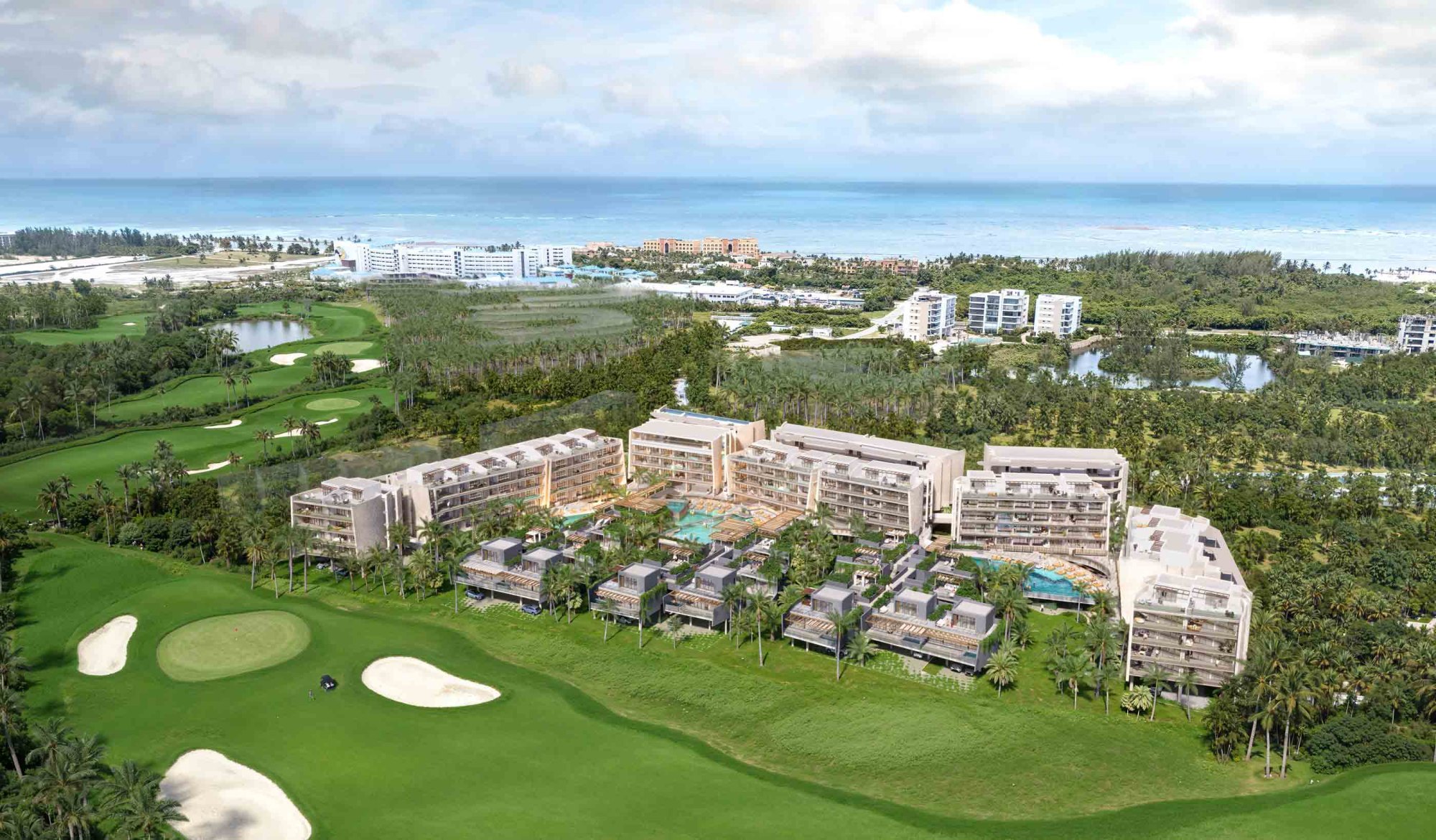
Search for beaches in Punta Cana and you are handed a ranked list, which is the wrong shape for the question. This is one continuous shore carrying a dozen names, and the division that matters is geometric rather than editorial: the coastline turns a corner, and the stretches on either side of it behave differently in wind, in seaweed, and in who controls the land behind the sand. Andara sits inland from all of it, in Cap Cana on the Las Iguanas golf course, about 15 minutes from Punta Cana International Airport.
Punta Cana does not have a beach — it has a chain of them
The names used here — Uvero Alto, Macao, Arena Gorda, El Cortecito, Bávaro, Cabeza de Toro, and further round the coast Juanillo and Playa Blanca — do not mark separate beaches the way a park has a gate. They mark stretches of one continuous ribbon of sand, and no authority publishes the line where one ends and the next begins. Ask two residents where Bávaro stops and you will get two answers, both defensible.
That matters to a buyer, because the differences that do exist are not differences in the sand itself. They are differences in what has been built behind it, who looks after it, how the shore is angled into the wind, and whether the offshore reef sits in front of it. Those four variables explain nearly everything a visitor notices, and not one of them survives being flattened into a ranked list.
The corner at Cabo Engaño divides the coast in two
Follow the shoreline south and it eventually turns. That corner — Cabo Engaño, the eastern tip of the island — is the landmark worth carrying in your head, because the sand north of it and the sand south of it are not exposed to the same sea.
North of the corner, the shore faces east into the open Atlantic. The easterly trade wind arrives onshore, so the water tends to be glassiest early and choppier as the land heats through the day, and the drifting rafts of sargassum ride that same easterly set straight in. South and west of the corner, inside Cap Cana, the shore has turned away from that fetch: beach-condition trackers and hotel operators consistently describe these southern coves as receiving less weed than the east-facing strand, and as staying calm for more of the day.
The second variable is the reef. A coral reef lies offshore along much of this coast and takes the energy out of the swell before it lands, which is why so much of the water here reads as a shallow flat lagoon rather than as surf. Where the reef is absent you get waves — which is why the surf schools sit in one place instead of spreading along the shore.
| Stretch | Side of the corner | What people go there for |
|---|---|---|
| Uvero Alto and Macao | East-facing, north end | Open sand with little built behind it; Macao is a beach break over a sandy bottom with no reef in front, which is why the surf schools are there |
| Arena Gorda and El Cortecito | East-facing | Resort frontage giving way to a working beach town — shops, bakeries, boats pulled up on the sand |
| Playa Bávaro | East-facing | A long commercial strip: watersports, catamarans, public entrances anyone may use |
| Cabeza de Toro | East-facing, at the bend | Quieter water, with reef life close enough in to snorkel from the sand |
| Juanillo and Playa Blanca | Around the corner, inside Cap Cana | Sheltered, closely tended sand behind a controlled entrance |
What the law settles at the water's edge, and what it leaves open
Beaches in the Dominican Republic are public, and that is a statutory position rather than a courtesy. Law 305 of 1968 places the band of shore above the tide line in public hands — it cannot be sold, and no owner or hotel can turn it into a private beach. Read the depth as roughly the first 200 feet inland from the high-tide line. A resort advertising a private beach is describing how it manages the place, not what it owns.
What the law does not settle is how you reach the sand. The land behind that public band can be, and usually is, privately held, which is why an operator may lawfully control the access road, the parking, the loungers and the bar while the sand in front of them stays public. Cap Cana is a gated community, and visitors who do not live inside it are commonly registered at the entrance and asked where they are going; that arrangement is widely described by beach-club operators and by visitors, and the current procedure is worth confirming with the community rather than taking it from a page like this one.
The working rule for a buyer is to treat public as a statement about ownership and reachable as a separate question, asked about a specific address, on a specific day, at a specific gate.
Choose by what you want the day to be
To learn to surf. Macao is the answer, and the reason is physical rather than fashionable: it is a beach break over a sandy bottom with no reef in front of it, which is a forgiving place to fall off a board. It is public, largely undeveloped and some way north of the hotel belt, so plan it as an excursion rather than an afternoon.
To swim, or to take children in. The reef-protected stretches give you flat, shallow water a long way out. That is most of this coast on an ordinary day, and it is the single feature that makes the shoreline as usable as it is.
To snorkel from the sand instead of from a boat. Cabeza de Toro, at the bend in the coast, is the stretch usually named for that.
To have shops, boats and lunch behind you. Bávaro and El Cortecito carry the working strip: park at a public entrance, hire something with an engine, and eat without walking back through a resort lobby.
One badge deserves care before you use it as a filter. Blue Flag certification does operate in the Dominican Republic, and certified stretches on this coast have included ones at Arena Gorda and Bávaro — but the award attaches to a single managed stretch, normally the section run by one hotel or beach club, and it is renewed season by season. The sand next door, under the same beach name, may hold none. What it certifies is that the operator supervises the water and keeps first aid on the sand, tests the bathing water through the season, publishes environmental information, and provides for access — an amphibious bathing chair, for instance. Check whether the stretch you care about holds one this season; never treat it as a permanent property of a named beach.
Sargassum is a management question before it is a weather one
Nobody can tell you what a given stretch will look like on a given morning, and a page that hands you a seaweed calendar is selling a certainty it does not have. Sargassum crosses the Atlantic in enormous floating rafts and lands where wind and current put it, which is why one stretch can be buried while the next along is clear the same afternoon.
Two things are worth knowing instead. The first is the geometry above: the east-facing strand takes the direct set, and the coves around the corner generally take less of it. The second is that the visible difference between two neighbouring stretches is usually not the sea at all — it is who rakes the sand, with what equipment, and how early. That is an operator's budget, not a forecast.
This page publishes no seaweed season for Punta Cana. Commercial condition trackers and hotel operators describe the heaviest arrivals as falling in the warmer months, but no Dominican authority issues a per-beach prediction, and a travel blog's estimate will not be converted into a figure here. If a particular week matters, look at the beach operator's own recent photographs, and treat any basin-scale satellite outlook as a statement about a season rather than about your holiday.
What all of this means if you own at Andara
Andara is inland. It stands on the Las Iguanas golf course inside Cap Cana, a Jack Nicklaus design, with 175 residences priced from $280,600 — one-bedroom homes of about 930 sq ft of total constructed area, up to a 2,912 sq ft three-bedroom penthouse — and delivery in Q4 2028. The drive time the project publishes is 15 minutes to Punta Cana International Airport. No drive time to any beach is published, so ask the sales team for a current door-to-door figure to the specific entrance you would use; the answer depends on which gate you leave by and on what the road is doing that week.
The honest consequence is that the everyday water at Andara is not the sea. It is the seven pools — six waterfall pools, plus a rooftop infinity pool reserved for adults, looking out to the ocean. The beach is an outing you drive to, as it is for most owners on this coast who are not sitting on the sand. A buyer who understands that before signing is a happier owner at handover than one who was sold a beach.
If you intend to let the residence, the same candour pays. The return shown on this site is a projected 11-15% net annual figure, not an achieved one, and a guest who arrives expecting to walk onto the sand and finds a drive will say so in a review. Answer the beach question in the listing, name the stretch you actually recommend and why it suits that guest, and let the pools do the work they were built for.
Common questions
- Which Punta Cana beach is closest to Andara?
- Andara publishes one drive time — 15 minutes to Punta Cana International Airport — and no drive time to any beach, so this page will not print one. Andara stands inland, on the Las Iguanas golf course inside Cap Cana, which means every beach here is a drive rather than a walk. Ask the sales team for a current door-to-door figure to the specific beach entrance you would use, and treat any brochure number as something to verify.
- Are the beaches in Punta Cana public?
- Yes. Law 305 of 1968 places the band of shore above the tide line in public hands — roughly the first 200 feet inland from the high-tide line — and it cannot be sold or converted into a private beach. Access is a different matter: the land behind that band is usually private, so an operator can lawfully control the road, the parking and the loungers while the sand itself stays public.
- Where do you surf in Punta Cana, and where do you swim?
- You surf at Macao, because it is a beach break over a sandy bottom with no reef in front of it — forgiving water to learn in. You swim almost everywhere else, because a coral reef lies offshore along much of this coast and flattens the swell before it lands, leaving shallow water a long way out. The reef is the reason the two activities happen in different places.
- Does a Blue Flag beach mean the water is clean?
- It means less than the name suggests, and it is still useful. The award goes to one managed stretch — normally the section run by a particular hotel or beach club — and it is renewed season by season, so the sand next door under the same beach name may hold none. It signals supervision and first aid on the sand, bathing-water testing through the season, published environmental information, and provision for access. Check the specific stretch, this season.
- When is the seaweed worst on the Punta Cana beaches?
- No Dominican authority publishes a per-beach forecast, so this page gives no seaweed season. Commercial condition trackers and hotel operators describe the heaviest arrivals as falling in the warmer months, and the east-facing strand generally receives more than the coves around the corner at Cabo Engaño. On any given morning the bigger variable is who rakes the sand and how early.
Want the details for your own situation?
Ask about availability, layouts or the buying process, and someone from the sales team will get back to you.
Get in touch