Scuba diving in Punta Cana from Andara: the wrecks, the reserves and the rules
Divers who come to Punta Cana usually arrive with one question: is there anything worth seeing beyond the reef in front of the hotels? There is, and most of it is history: a cargo ship aground since 1978, a freighter sunk on purpose in 1999, two underwater museums of 18th-century wreckage and a pirate's ship from 1699 off Catalina. This guide maps those sites from Andara in Cap Cana, says which certification each one calls for, and explains the protected areas they lie in and the rules that come with them.
Where do divers staying at Andara actually go?
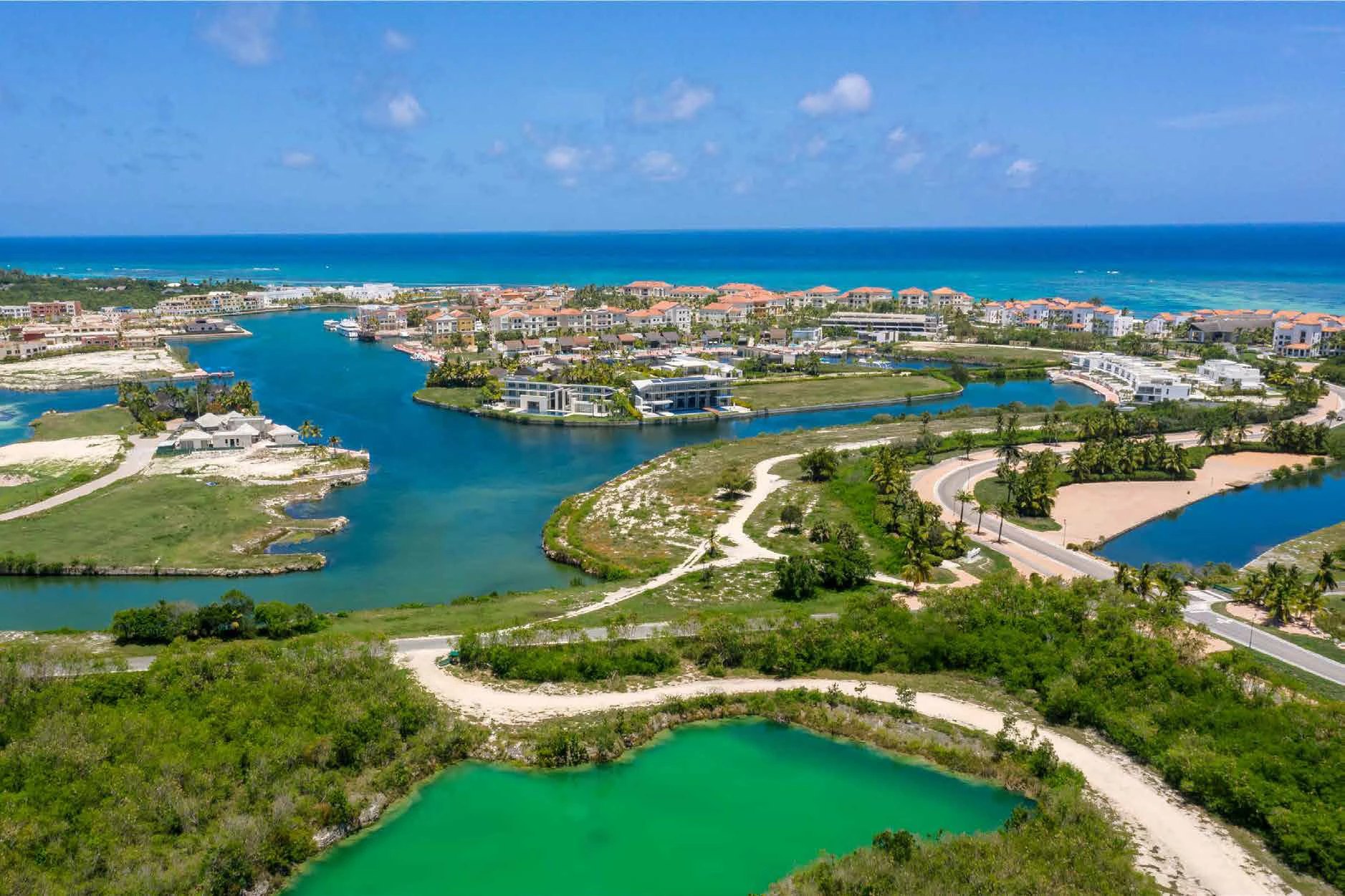
Three places, at three different distances. The first is the reef system along this coast, which the Ministry of Environment's 2024 sanctuary plan describes as a barrier reef: a sandy lagoon with seagrass and patch reefs behind it, a crest where the swell breaks, a band of coral spurs and sand channels, and a deep fore reef outside. One local dive centre's published guide puts most of these reef dives at about 40 to 60 ft, with shallower sites of about 16 to 40 ft used for first dives. Boats reach it from the harbours on the coast; Marina Cap Cana is about 4.3 miles by road from Andara.
The second is Bayahibe, the dive town on the south coast, about 49 miles by road on the Coral highway and about 29 in a straight line. The third is Catalina Island off La Romana, about 40 miles away in a straight line, reached by a long road transfer and a short crossing. Each is a different kind of day, and the table below sorts the wrecks among them.
Which wrecks can you dive in a day from Andara?
The nearest is the Astron, a cargo ship that ran aground on 7 April 1978 while carrying corn to Cuba. It lies in about 50 ft of water off the Bávaro side of the coast, north of Cabo Engaño, with a small part still above the surface, about 18 miles from Andara in a straight line. At that depth it is within reach of an open-water diver.
Bayahibe holds the deeper and the older. The St. George, a cargo ship sunk in 1999 as an attraction for recreational divers, sits at about 115 ft by the Ministry's figure. Nearby, the Guadalupe and Guaraguao underwater archaeological preserves lie at about 16 to 33 ft, where cannons, an anchor and other remains of early 18th-century wrecks rest on the sand as archaeologists found them. Off Catalina, the remains of a famous pirate's ship from 1699, found in 2007, lie in only about 10 ft of water roughly 230 ft from the beach, a site for a mask and fins rather than a tank.
| Site | Where | What it is | Depth, about | From Andara |
|---|---|---|---|---|
| Astron | Off the Bávaro coast | Cargo ship aground in 1978 | 50 ft | 18 mi, straight line |
| St. George | Off Bayahibe | Cargo ship sunk in 1999 for divers | 115 ft | 49 mi by road to Bayahibe |
| Guadalupe and Guaraguao | Off Bayahibe | Underwater archaeological preserves | 16 to 33 ft | 49 mi by road to Bayahibe |
| Pirate's ship of 1699 | Off Catalina Island | Wreck found in 2007 | 10 ft | 40 mi, straight line |
What certification does each dive need?
Under the recreational training standard that one local centre teaches, a try dive is open from age 10, is not a certification, and stays shallow: a skills session limited to 20 ft, then an optional dive to no more than 40 ft beside an instructor, after a medical questionnaire that may call for a doctor's statement. An open-water certification lets a diver go to 60 ft with a buddy, with divers aged 10 and 11 limited to 40 ft. Advanced certification extends the limit to about 100 ft and the deep specialty to about 130 ft.
Read against the table, that sorts the wrecks neatly. The preserves off Bayahibe and the Astron suit an open-water diver. The St. George, at about 115 ft by the Ministry's figure, is deeper than an advanced certification's limit and belongs to divers trained for depth. Catalina's 1699 wreck needs no certification at all. A certification does not expire, but a refresher is advised after more than six months out of the water, which is worth booking on the first day of a stay rather than the last.
Which protected areas and rules apply to these dives?
The sea off Cap Cana and Punta Cana lies inside the Southeast Reefs Marine Sanctuary, created in 2009 by Decree 571-09 and covering about 3,000 square miles between the Mona Passage and the waters off San Pedro de Macorís. Rules adopted in 2017 for its ecotourism strip off Punta Cana restrict fish traps and spearfishing, ban compressor fishing and trammel nets, protect parrotfish, sharks and turtles, close lobster and conch in season, and make the dive sites known as el Acuario, el Museo and el Coliseo fishing reserves. The Ministry's 2024 plan zones the reefs as a conservation area where tourist diving comes with education about the reef, and sets a few sites aside with no tourist diving at all, among them the elkhorn coral areas off Cap Cana.
Bayahibe's waters belong to a different protected area: the national park declared in 1975 as Parque Nacional del Este and renamed Parque Nacional Cotubanamá in 2014, with both names still in use. Catalina is its own unit again, the Isla Catalina natural monument, beside the sanctuary rather than inside it. For a diver the practical meaning is the same everywhere: touch nothing, take nothing, and choose a centre that briefs on reef care before the boat leaves.
How do you dive safely and still fly home on time?
Plan the last dive around the flight. The consensus guidance from diving medicine recommends a surface interval of at least 12 hours before flying after a single no-decompression dive, at least 18 hours after several dives in a day or several days of diving, and substantially longer after any dive that needed decompression stops. Those are minimums, not guarantees. For an owner who flies in and out often, the simple habit is to keep the final day dry.
In a suspected diving injury, the first call is a diving-medicine emergency hotline rather than the nearest clinic, because the hotline tracks which recompression chambers are available and where a diver should go. Ask your dive centre for that number before the first dive. On the water itself, the same local centre finds a thin shorty wetsuit comfortable even in January, the coolest month.
Common questions
- Are there shipwrecks to dive near Punta Cana?
- Yes. The Astron, aground since 1978 in about 50 ft of water, lies off the Bávaro coast about 18 miles from Andara in a straight line; the St. George and two archaeological preserves are off Bayahibe.
- How deep is the St. George wreck?
- The Ministry of Environment places it at about 115 ft, deeper than the 60 ft open-water limit and the roughly 100 ft advanced limit under one common training standard.
- Is the reef off Cap Cana protected?
- Yes. It lies inside the Southeast Reefs Marine Sanctuary, created in 2009, whose 2017 rules protect parrotfish, sharks and turtles and make three dive sites fishing reserves.
- How long should I wait to fly after diving?
- Diving-medicine guidance recommends at least 12 hours after a single no-decompression dive and at least 18 hours after several dives or several days of diving.
Want the details for your own situation?
Ask about availability, layouts or the buying process, and someone from the sales team will get back to you.
Get in touch